7 Best Wooden Toys to Improve Hand Eye Coordination?

Time:2026-09-14 Author:Charlotte
0%

How do wooden toys improve hand eye coordination? The answer begins with repeated, purposeful movement. A child reaches for a smooth wooden bead, adjusts finger pressure, and guides it onto a narrow cord. Each attempt links visual information with controlled hand movement. Over time, this practice can support accuracy, timing, and spatial awareness.

Professional guidance supports active, hands-on play. The World Health Organization recommends at least 180 minutes of physical activity daily for children aged three to four, including varied movement. The American Academy of Pediatrics also describes play as important for motor, cognitive, and social development. Wooden toys can contribute to this experience, but they cannot replace outdoor movement, caregiver interaction, or meaningful conversation.

Maria Montessori, a physician and educational pioneer, wrote, “The hands are the instruments of man’s intelligence.” Her observation explains why simple toys remain valuable. Shape sorters, stacking rings, wooden puzzles, pegboards, lacing cards, building blocks, and threading beads create visible, physical challenges. Children can see the target, feel resistance, and correct mistakes immediately.

The evidence is promising, not magical. Research often examines hands-on play broadly, rather than wooden toys alone. That distinction matters. Toy material does not automatically improve coordination. The child’s age, interest, supervision, and practice time matter more. A poorly chosen toy may sit untouched.

This guide examines seven wooden toys through those practical factors. It considers grip size, movement precision, challenge level, and opportunities for repetition. Each choice should feel achievable, yet slightly demanding. That small stretch is where coordination develops.
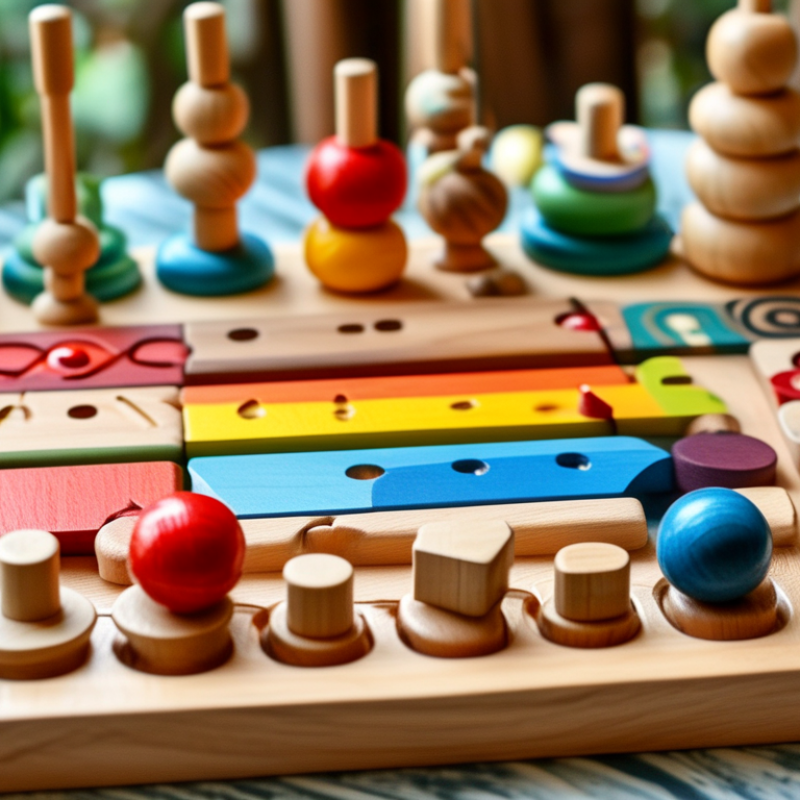
7 Best Wooden Toys to Improve Hand Eye Coordination?

Understanding Hand-Eye Coordination and Its Role in Early Development

7 Best Wooden Toys to Improve Hand-Eye Coordination?

Understanding Hand-Eye Coordination and Its Role in Early Development

Hand-eye coordination helps children guide their hands using visual information. It supports grasping, reaching, drawing, dressing, and early writing. Small movements matter. The CDC lists catching a large ball as a typical four-year milestone. This shows how visual tracking and controlled movement develop together. However, children progress at different speeds.

Seven useful wooden options include stacking rings, threading beads, peg boards, shape sorters, simple puzzles, lacing cards, and hammer benches. Each toy creates a clear action and response.

A child watches a bead, adjusts the fingers, and tries again. The 2019 WHO guidelines recommend regular physical activity and less sedentary screen time for young children. Hands-on play offers active practice without requiring digital stimulation.

In early-years settings, educators often watch for effort rather than perfect results. A child may place a puzzle piece incorrectly several times. That struggle can build visual judgment and persistence. I would not claim that wooden toys alone improve coordination. Adult interaction, free movement, sleep, and developmental needs also matter.

The UNICEF early childhood framework identifies responsive caregiving and opportunities for learning as important developmental supports. Keep it open-ended. Let children tap, sort, thread, and rebuild safely. A toy that looks simple may reveal very different skills across ages.

Key Features of Effective Wooden Coordination Toys

7 Best Wooden Toys to Improve Hand-Eye Coordination?

Effective wooden coordination toys do more than look attractive. They should invite reaching, turning, fitting, threading, and controlled release. Useful choices include peg boards, bead mazes, lacing frames, stacking rings, shape sorters, wooden gears, and balance games. Each toy should offer a clear goal without removing the child’s freedom to experiment. UNICEF’s 2018 Learning through Play report highlights active engagement, meaningful repetition, and problem-solving as important play qualities. That evidence supports toys with movable parts and adjustable challenge.

Size matters. Large knobs help younger children grip safely, while smaller pieces can challenge older preschoolers. Smooth edges, stable bases, and non-toxic finishes are essential quality signals. The American Academy of Pediatrics’ 2018 clinical report links play with developing self-regulation, language, and executive function. Coordination is part of that broader process. A 2022 CDC milestone checklist also tracks practical hand skills, such as using buttons, drawing, and handling objects by preschool age. Progress differs widely.

Watch the child’s hands. Do they slow down before placing a piece? Do they change grip after failure? Those moments show learning. A toy that is too easy may become decoration. One that is too difficult may create frustration. I have sometimes mistaken silence for concentration. That was not always correct. Short play sessions, careful observation, and small adjustments usually work better than pressure. Evidence remains limited for claiming that one wooden toy directly improves coordination. Its value depends on fit, repetition, supervision, and the child’s interest.

7 Best Wooden Toys to Improve Hand-Eye Coordination

This comparison rates common wooden toy types from 1 to 5 across four practical coordination features: visual tracking, precision control, bilateral hand use, and adjustable challenge. Higher scores indicate stronger support for that skill.

Toys that combine accurate placement, controlled movement, and repeated visual feedback generally provide the most varied hand-eye coordination practice.

Seven Wooden Toys That Strengthen Hand-Eye Coordination

Seven Wooden Toys That Strengthen Hand-Eye Coordination

Hand-eye coordination grows when children watch, reach, adjust, and try again. Wooden toys offer clear movement and useful resistance. Their simple shapes also make mistakes easy to notice.

Stacking rings encourage children to judge size and position.

A bead maze develops controlled pushing and visual tracking.

Lacing boards improve threading accuracy and patient finger movement.

Shape sorters teach children to rotate pieces until each opening matches.

That small pause matters.

Wooden peg boards strengthen grasping and placement skills. Children can lift, aim, and press each peg into a hole.

Chunky wooden puzzles support visual scanning and careful fitting.

Balancing blocks add planning, because one careless move can affect the whole structure. I have seen children rush at first, then slow down after repeated falls.

Adult support should remain calm and limited. Naming actions, such as “turn” or “steady,” can guide attention without taking over. Choose pieces that match the child’s age and hand strength. Inspect toys regularly for splinters, loose parts, or damaged finishes. Supervision is especially important for younger children.

Not every child enjoys the same challenge. A sorting toy may frustrate one child but engage another. That is worth remembering. Progress can look uneven, and one successful attempt does not prove mastery. Short, playful sessions often work better than forced practice. Let the child repeat easy actions, then introduce one harder step.

How to Match Wooden Toys With Different Developmental Stages

7 Best Wooden Toys to Improve Hand-Eye Coordination

Matching Wooden Toys With Different Developmental Stages

Matching wooden toys to developmental stages helps children practice hand-eye coordination without unnecessary frustration. For babies, choose large grasping rings and simple stacking blocks. These encourage reaching, holding, releasing, and visual tracking. Stay close, because even sturdy wooden pieces can become unsafe if they are small. Around 18 months, a peg board invites controlled placement and repeated correction. Shape sorters suit many toddlers, but only when the openings feel challenging rather than impossible.

Preschool children can try knob puzzles, threading beads, and lacing boards. These activities demand rotation, two-hand cooperation, and careful visual planning. A child may complete a puzzle quickly yet struggle with lacing. That difference matters. It shows that coordination is not one single skill. Choose one toy for success and one for gentle challenge. Developmental ranges overlap, so observe the child instead of treating age labels as exact promises. Adults sometimes rush this process; more pieces do not always mean better learning.

Tips: Offer short sessions, then pause. Place the toy on a stable, well-lit surface. Name actions such as “turn,” “pull,” and “fit.” Check for loose parts, splinters, and safe finishes. If frustration rises, simplify the task before giving direct help. A pediatric occupational therapist can suggest adaptations when coordination concerns persist.

7 Best Wooden Toys to Improve Hand-Eye Coordination? - How to Match Wooden Toys With Different Developmental Stages

No. Wooden Toy Typical Age Range Developmental Stage Hand-Eye Coordination Practice Key Skills Developed How to Match the Toy to the Child Important Safety Consideration
1 Large-Grip Wooden Stacking Rings 6–18 months Early grasping and reaching Reaching for rings, grasping them, and aligning each ring with a central post. Visual tracking, palmar grasp, bilateral hand use, release control, and early size recognition. Begin with two or three large rings and a wide, stable base. Add more rings when the child can place them with less assistance. Use oversized pieces that cannot fit completely into a child’s mouth. Supervise play and avoid rigid posts with sharp edges.
2 Wooden Shape-Sorting Box 12–24 months Matching and problem solving Rotating and positioning a block until it aligns with the matching opening. Shape discrimination, wrist rotation, spatial reasoning, persistence, and controlled release. Start with two or three contrasting shapes and large openings. Introduce additional shapes after the child understands the matching action. Choose smooth, thick blocks without detachable small parts. The lid and openings should be securely constructed and free of pinch points.
3 Wooden Peg Board 18–36 months Precision and controlled placement Picking up pegs and guiding them vertically into correctly sized holes. Pincer grasp, finger strength, depth perception, visual-motor planning, and precision. Choose thick pegs with easy-to-hold knobs and a board with generous holes. Progress to narrower pegs as control improves. Pegs should be too large to swallow and firmly finished. Avoid splinters, loose paint, and very long pegs that could cause injury if a child falls.
4 Wooden Threading Beads 3–5 years Bilateral coordination Holding a cord with one hand while guiding its tip through a bead with the other hand. Two-hand coordination, pincer control, sequencing, concentration, and hand strength. Start with large beads and a stiff-tipped lace. Use simple color or shape patterns before introducing longer sequences. This activity requires close adult supervision because beads and cords can present choking or strangulation hazards. Store the set out of reach after use.
5 Chunky Wooden Knob Puzzle 18 months–3 years Visual matching and rotation Lifting a puzzle piece, rotating it, and placing it into the corresponding recessed space. Shape matching, spatial awareness, wrist rotation, grasp-and-release control, and visual attention. Begin with three to five clearly different pieces and large knobs. Move to smaller pieces and more complex outlines as accuracy improves. Select pieces with securely attached knobs and rounded edges. Avoid pieces that are small enough to fit entirely in the child’s mouth.
6 Wooden Hammer-and-Peg Bench 2–4 years Targeting and force control Aiming a lightweight mallet at a visible peg and adjusting the force needed to move it. Eye-to-hand targeting, timing, grasp strength, motor planning, and understanding of cause and effect. Choose a stable bench and let the child begin with one or two pegs. Encourage slow, accurate taps before faster hammering. Use a lightweight wooden mallet with a secure head. Play on the floor or a stable surface and keep fingers clear of the striking area.
7 Wooden Construction Blocks 3–6 years Planning and refined control Picking up, aligning, balancing, and stacking blocks to create a stable structure. Grip refinement, spatial planning, balance, visual estimation, precision, and problem solving. Start with larger rectangular blocks and simple towers. Add arches, cylinders, and smaller blocks when the child can build without frequent collapse. Use smooth, solid blocks with rounded or softened edges. Supervise younger children and avoid pieces small enough to pose a choking risk.

Note: Age ranges are general developmental guides, not strict milestones. Choose a toy according to the child’s current abilities, interests, and need for adult supervision.

Safe and Engaging Ways to Use Wooden Toys for Practice

Wooden toys can turn hand-eye practice into purposeful play. Seven useful choices are stacking rings, peg boards, shape sorters, chunky puzzles, lacing cards, threading beads, and building blocks. Each encourages reaching, grasping, aiming, or controlled release. A child may guide a ring onto a post, then adjust the wrist after missing. That small correction matters.

Safety should shape every activity. Choose toys with smooth edges, secure parts, and clearly stated age guidance. Avoid loose beads or tiny pieces for children under three. The U.S. Consumer Product Safety Commission reported an estimated 231,700 toy-related emergency department injuries among children under 15 in 2023. This figure supports careful supervision, not fear. Inspect wood for cracks, splinters, peeling finishes, or loose hardware. Stop using damaged pieces.

Make practice engaging with short, calm challenges. Place a peg board on a stable mat. Offer three blocks before adding more. Sit nearby and name the movement: “Reach, turn, fit.” Never force completion. Some children need larger pieces, slower pacing, or a different toy. I sometimes overestimate how long practice should last. Five focused minutes may work better than twenty restless ones. The American Academy of Pediatrics also emphasizes developmentally appropriate play, shared interaction, and safe environments in its clinical guidance. Let children experiment, make mistakes, and try again. Progress can look uneven. That is normal.

FAQS

How does hand-eye coordination support early development?

It helps children guide hand movements using what they see. This supports grasping, drawing, dressing, and early writing. Small actions matter.

Which wooden toys can encourage hand-eye coordination?

Useful choices include stacking rings, peg boards, shape sorters, puzzles, beads, lacing cards, and hammer benches. Each toy links an action with a visible result.

Which toys suit babies best?

Choose large grasping rings or simple stacking blocks. They encourage reaching, holding, releasing, and visual tracking. Stay close during play.

What can toddlers practice with a peg board?

A peg board supports controlled placement and repeated correction. The child watches the hole, adjusts the peg, and tries again. It can be frustrating.

Are shape sorters suitable for every toddler?

Not always. The openings should feel challenging, not impossible. If every piece fails, use a simpler shape or offer gentle guidance.

Which toys may suit preschool children?

Knob puzzles, threading beads, and lacing boards can work well. They require rotation, two-hand cooperation, and careful visual planning. Skills may differ widely.

How long should a child play with these toys?

Offer short sessions, then pause. Place the toy on a stable, well-lit surface. A few focused minutes can be enough.

Should adults correct every mistake?

No. Let children tap, sort, thread, and rebuild safely. Name actions such as “turn,” “pull,” and “fit.” I may overgeneralize; every child needs a different level of help.

How can adults choose an appropriate challenge?

Pair one toy with easy success and another with gentle challenge. More pieces do not always mean better learning. Observe effort, not perfect results.

What safety checks are important?

Check for loose parts, splinters, and unsafe finishes. Keep small pieces away from babies. Supervision remains important, even with sturdy wooden toys.

Conclusion

Wooden toys can play an important role in developing hand-eye coordination during early childhood. Through grasping, reaching, stacking, fitting, threading, and balancing, children learn to guide their hand movements according to what they see. But how do wooden toys improve hand eye coordination? Their simple, hands-on designs encourage children to focus, judge distance, control movement, and repeat actions until they become more accurate. Effective toys are appropriately sized, durable, visually clear, and challenging without causing frustration.

Seven useful choices include stacking rings, shape sorters, wooden puzzles, bead mazes, lacing boards, balancing games, and building blocks. Each toy can support different skills and developmental stages, from basic grasping in toddlers to more precise problem-solving in older children. Adults can make play safe and engaging by choosing age-appropriate materials, supervising use, offering gentle guidance, and allowing children to explore at their own pace. Short, enjoyable practice sessions can build confidence, concentration, fine motor control, and coordination over time.

Charlotte

Charlotte

Charlotte is a seasoned marketing professional with a deep understanding of the company's portfolio and a passion for elevating its presence in the market. With a keen eye for detail and a commitment to excellence, she ensures that our professional blog is regularly updated with insightful articles......