How to Choose Durable Wooden Educational Toys in 2026?

Time:2026-09-19 Author:Mason
0%

Choosing durable wooden educational toys in 2026 requires more than admiring a smooth finish or attractive colors. Parents, teachers, and buyers should examine the wood, construction, safety details, and learning purpose together. A well-made toy should feel solid in a child’s hands, without sharp edges, loose parts, or strong chemical odors. It should also invite repeated use, from stacking and sorting to imaginative building.

Many shoppers ask, “why are wooden educational toys durable and long lasting?” The answer usually involves dense wood, reliable joinery, and careful surface treatment. Hardwood can resist dents better than soft, poorly finished timber. Secure connections help prevent pieces from separating during active play. Water-based, child-safe finishes may protect surfaces, but they cannot make careless construction dependable. Inspect the toy closely. Small cracks matter.

Real-world experience also shows that durability depends on maintenance and age-appropriate use. A wooden puzzle left near a radiator may split over time. A balance board used on wet ground may develop swelling or discoloration. These details are easy to overlook. They deserve attention.

The best choices balance longevity with educational value. Look for clear design, tactile variety, repairable parts, and instructions from a transparent manufacturer. Independent testing or recognized safety documentation can strengthen confidence, although no label replaces regular inspection. Even excellent toys wear out. That is not failure. It is a reminder to choose thoughtfully, maintain responsibly, and replace damaged pieces before they become unsafe.
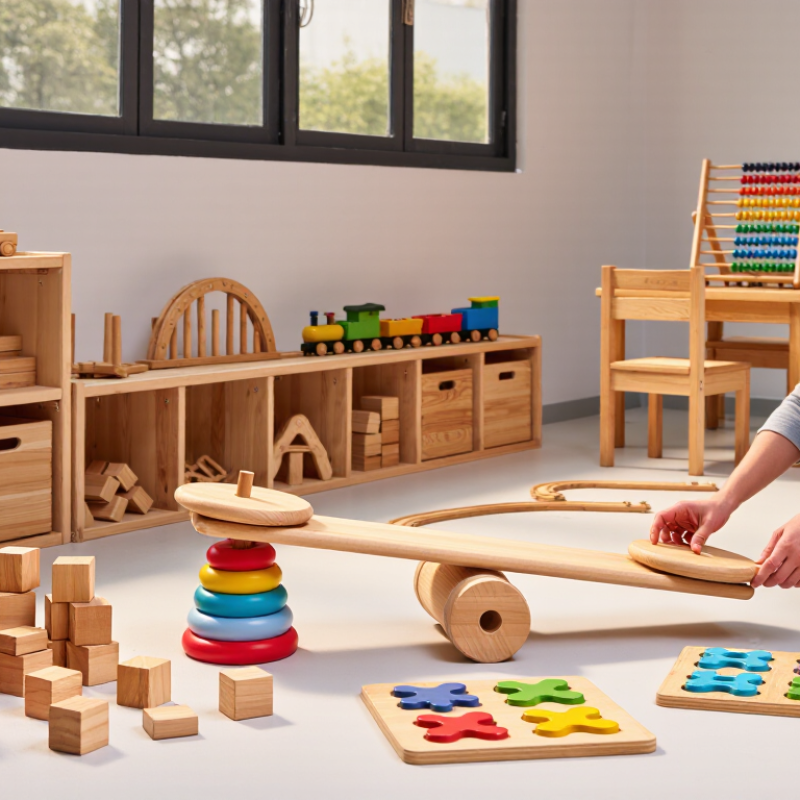
How to Choose Durable Wooden Educational Toys in 2026?

Define Durability: Wood Moisture at 6–8% and Strong Joint Construction

When I inspect wooden educational toys, I begin with the wood itself. A moisture meter helps. The target moisture level is 6–8% before assembly. This range usually limits shrinking, swelling, and surface cracks during indoor use. I check several points, especially near drilled holes and broad panels. One reading is not enough. Humidity changes during storage, so manufacturers should measure wood after acclimatization. I still treat this figure as guidance, not a guarantee.

Joint construction often reveals more than a polished finish. Look for tight-fitting dowels, reinforced corners, and cleanly seated connections. Screws should not wobble or protrude. Loose joints fail quickly. Pull gently. Twist carefully. A quality toy should resist ordinary handling without sharp movement or creaking. Water-based adhesive can support a joint, but glue alone should not compensate for poor fitting. Rounded edges and smooth sanding also reduce damage when children handle pieces repeatedly.

In my checks, I examine the same toy after repeated drops, stacking, and daily cleaning. No test is perfect. A joint may survive inspection yet loosen months later. That possibility deserves honest attention. Ask for moisture records, material specifications, and durability test results. Reliable documentation should identify the wood type, joint method, and inspection date. I would also inspect unfinished areas, because hidden splits can weaken a toy despite attractive paint. Durability is not only about appearance; it is about stable materials, careful construction, and evidence that supports the claims.

How to Choose Durable Wooden Educational Toys in 2026?

Durable wood generally performs best when its moisture content is controlled at 6–8%. Choose toys with strong, well-fitted joints, such as doweled, interlocking, or securely bonded construction, and inspect them for gaps, movement, or exposed sharp edges.

The 6–8% range represents the recommended moisture-control window in this selection guide. Moisture below or above the range may increase the risk of brittleness, dimensional movement, loosened joints, or surface checking over time.

Verify Safety: ASTM F963-23, EN 71, ISO 8124, and CPSC Requirements

How to Choose Durable Wooden Educational Toys in 2026?

Safety verification should begin with the destination market. In the United States, ASTM F963-23 covers mechanical hazards, flammability, chemicals, batteries, and labeling. CPSC rules also require testing through accepted laboratories, tracking information, and limits for lead and certain phthalates. In Europe, EN 71 examines physical safety, flammability, and migration of specific elements. ISO 8124 offers a wider international framework, but it does not replace local law.

The risk deserves attention. The U.S. CPSC’s Toy-Related Deaths and Injuries report estimated 231,700 toy-related emergency-room injuries among children under 15 in 2023. Small detachable parts, sharp edges, loose wheels, and peeling paint remain practical warning signs. A wooden surface may feel solid, yet a poorly sealed coating can chip after repeated handling. A certificate is useful evidence, not a forever promise.

Tips: Ask for current test reports, not only a compliance logo. Check the tested model, age grade, production date, and laboratory details. Rub painted edges with a dry cloth and inspect joints, magnets, cords, and tiny components. Choose dense wood with smooth grain and durable, non-peeling finishes. I would also repeat inspections after washing or heavy play; this step is easy to overlook. Standards help, but careful observation still matters.

Evaluate Finishes: EN 71-3 Chemical-Migration Limits and Coating Quality

How to Choose Durable Wooden Educational Toys in 2026?

A durable wooden toy needs more than attractive grain and a smooth touch. Its coating should meet EN 71-3 chemical-migration requirements. This standard evaluates elements that may migrate from paint, varnish, wood, or printed surfaces. Limits differ for dry, liquid, and scraped-off materials. Ask for a laboratory report showing the tested material category and the current standard version. The European Commission’s 2024 Safety Gate report recorded 4,137 product alerts, proving that visible quality cannot replace evidence.

Coating quality also affects long-term safety. Check whether paint remains attached around corners, grooves, and frequently handled edges. Look for bubbling, powdery residue, sharp flakes, or exposed wood. A fully cured finish should resist ordinary rubbing and moisture, without a strong chemical smell. My own weak point is trusting a smooth feel too quickly. That test is useful, but incomplete. A glossy surface can still hide poor adhesion or excessive migration.

Tips: Request EN 71-3 results from an independent laboratory. Confirm the report names the exact toy or coating. Rub a hidden area with a clean, damp cloth. Stop using the toy if color transfers, peeling appears, or the surface becomes sticky. CPSC’s 2023 toy-injury report estimated 232,900 emergency-department-treated injuries among children under 14; finishing quality deserves careful attention.

How to Choose Durable Wooden Educational Toys in 2026? - Evaluate Finishes: EN 71-3 Chemical-Migration Limits and Coating Quality

Use this table as a purchasing and quality-screening guide. EN 71-3 migration limits are expressed in mg/kg of toy material. Category I covers dry, brittle, powder-like or pliable materials; Category II covers liquid or sticky materials; Category III covers scraped-off materials.

Evaluation Dimension What to Check Reference Value or Acceptance Guide Why It Matters for Wooden Educational Toys
Lead migration Test the coating, paint, printed decoration and accessible substrate under EN 71-3 procedures. Category I: ≤ 2.0 mg/kg
Category II: ≤ 0.5 mg/kg
Category III: ≤ 23 mg/kg
Lead can be present in pigments, contaminated raw materials or legacy coatings and is especially important for toys handled or mouthed by children.
Cadmium migration Check colored finishes, surface coatings and metallic-looking decorative layers. Category I: ≤ 1.3 mg/kg
Category II: ≤ 0.3 mg/kg
Category III: ≤ 17 mg/kg
Cadmium is restricted because it can occur in certain pigments and may migrate from poorly controlled decorative coatings.
Chromium VI migration Request a specific chromium VI result rather than relying only on a general heavy-metal statement. Category I: ≤ 0.02 mg/kg
Category II: ≤ 0.005 mg/kg
Category III: ≤ 0.2 mg/kg
Chromium compounds may be associated with pigments, treated materials or contamination; the limit is comparatively stringent.
Arsenic migration Include all accessible painted, stained, printed and sealed surfaces in the test sample. Category I: ≤ 3.8 mg/kg
Category II: ≤ 0.9 mg/kg
Category III: ≤ 47 mg/kg
Arsenic is a restricted element that may be relevant to contaminated pigments, wood treatments or recycled inputs.
Barium migration Pay particular attention to highly pigmented or opaque coatings. Category I: ≤ 1,500 mg/kg
Category II: ≤ 375 mg/kg
Category III: ≤ 18,750 mg/kg
Barium compounds can be used in some color systems and fillers, so coating formulation control is important.
Mercury migration Verify the result for paint, ink, stain and any metallic decoration. Category I: ≤ 7.5 mg/kg
Category II: ≤ 1.9 mg/kg
Category III: ≤ 94 mg/kg
Mercury is a restricted substance and should not be assumed absent without suitable material testing.
Coating adhesion Inspect edges, corners, drilled holes and high-touch areas after adhesion testing. Preferred screening result: no flaking, peeling or visibly detached film. A cross-cut classification of 0–1 under ISO 2409 is a useful quality benchmark where applicable. Poor adhesion can create chips that become accessible to children and can expose rough or contaminated surfaces.
Abrasion resistance Rub or abrade representative surfaces, including raised graphics and painted edges. Preferred result: no visible color transfer, exposed wood fibers, powdering or coating breakthrough after the agreed rub-cycle test. Define the cycle count in the purchase specification. Educational toys are repeatedly handled, stacked and transported; abrasion can rapidly remove thin or poorly cured finishes.
Wet-rub and saliva-contact durability Wipe or rub the surface with a damp cloth and inspect for tackiness, dye transfer or whitening. Preferred result: no sticky residue, visible color transfer, blistering or loss of film after the specified damp-rub procedure. Moisture from hands, cleaning and occasional mouthing can weaken finishes and increase contact with underlying materials.
Surface coverage Check that paint or sealant fully covers end grain, joints, grooves and recessed graphics where coverage is specified. Preferred result: uniform coverage without pinholes, bare patches, runs, bubbles or sharp coating ridges. Uneven coverage can cause premature wear, splinter exposure and inconsistent chemical-migration results.
Wood moisture and finish curing Measure moisture consistently and confirm that the finish is fully cured before packing. Practical production target: approximately 8–12% wood moisture for indoor wooden toys, unless the product specification requires another range. Finish must be dry, non-tacky and odor-stable. Excess moisture can contribute to swelling, cracking, adhesion loss and dimensional changes in educational components.
Sharp edges and coating defects Inspect every accessible edge, hole, corner and painted transition by sight and touch. Acceptance guide: no sharp points, splinters, loose chips, cracking, blistering or detachable coating fragments. Mechanical safety and coating durability are linked; a damaged finish can expose hazards even when the initial coating was compliant.
Documentation and retesting Match the test report to the exact toy construction, finish, colors, substrate and production version. Use a report from a competent laboratory and verify the current EN 71-3 edition adopted in the destination market. Retest after changes to pigment, coating supplier, wood species or process. A certificate for a different formulation or an earlier product version may not represent the finished toy being purchased.

Note: EN 71-3 limits apply to specified elements and toy-material categories; they do not by themselves confirm overall toy safety, coating adhesion or long-term durability. Always check the current standard edition and destination-market requirements before placing an order.

Check Sustainability: FSC Certification and Responsible Wood Sourcing

How to Choose Durable Wooden Educational Toys in 2026?

A durable wooden toy begins with responsible wood sourcing. Look for clear FSC certification information, not just a green symbol on the packaging. FSC certification can show that the forest material follows requirements for responsible management, biodiversity, and worker protections. Check the certificate number through the official FSC database. The product scope should include the toy or its wooden components.

Do not stop there. Ask where the wood was harvested and processed. Beech, maple, and rubberwood can be strong choices when sourced responsibly. Reclaimed wood may also help reduce pressure on forests, but its treatment history must be clear. Avoid toys with vague phrases such as “eco wood” or “natural timber.” Those claims prove little.

Small details matter. Inspect the grain, joints, and surface before buying. A smooth edge should not feel rough under a child’s finger. Water-based finishes may be preferable, but verify safety testing and drying instructions. FSC certification covers sourcing, not every feature of a toy’s design or coating. That distinction is easy to miss.

I once treated certification as a complete quality guarantee; that was too simple. Responsible buying needs more questions.

Check repair options, replaceable parts, and packaging waste. A toy that survives several children usually creates less waste than a cheaper toy that cracks quickly. Ask difficult questions. Accept that no material choice is perfect.

Compare Long-Term Value: Repairability, Replaceable Parts, and Lifespan

How to Choose Durable Wooden Educational Toys in 2026?

Durability starts with the repair plan, not the polished surface. Choose solid wood components with visible screws, standard dowels, and accessible joints. A cracked wheel should be replaceable, not a reason to discard the whole toy. Ask whether the maker supplies wheels, axles, knobs, and fasteners separately. Keep this question practical: Can a parent repair it with a screwdriver?

The Circularity Gap Report 2024 estimated that only 7.2% of the global economy was circular. That figure strengthens the case for longer product use. The UNEP Global Resources Outlook 2024 also projects global resource extraction could rise by 60% by 2060. A toy that survives several children reduces repeated material demand. However, replaceable parts matter only when they remain available. A five-year parts promise is more useful than vague claims about “premium quality.”

Inspect the toy at a child’s eye level. Look for thick wheels, smooth edges, tight joints, and finishes that resist peeling. Test moving parts gently. Listen for loose rattles. Educational value also depends on lifespan; stacking blocks should remain useful after novelty fades. I prefer open-ended designs, because one toy can support sorting, counting, balancing, and storytelling. My judgment is not perfect. A heavier toy may last longer, yet it can be awkward for small hands. Confirm safety documentation and age guidance from recognized testing authorities, then weigh repairability against everyday usability.

FAQS

What wood moisture level supports durable indoor wooden toys?

A moisture reading of 6–8% is a useful target before assembly.

Why should wood be measured after acclimatization?

Stored wood can absorb or lose moisture as humidity changes.

Which joints should buyers inspect?

Look for tight dowels, reinforced corners, and seated connections.

How can someone check joint strength safely?

Pull gently and twist carefully without forcing the toy.

Does adhesive alone create a strong wooden toy?

No. A water-based adhesive can support a properly fitted joint.

What finish problems should buyers look for?

Inspect corners, grooves, and frequently handled edges.

What chemical-safety evidence should manufacturers provide?

Request an independent laboratory report covering chemical migration limits.

How can coating adhesion be checked at home?

Rub a hidden area with a clean, damp cloth.

Why are unfinished areas important during inspection?

Hidden splits can weaken a toy beneath attractive paint.

What documents help support durability claims?

Ask for wood type, joint method, moisture records, and inspection dates.

Conclusion

Choosing durable wooden educational toys in 2026 requires more than selecting attractive designs. Durability begins with properly dried wood, ideally with a moisture level of 6–8%, combined with strong, secure joints that can withstand repeated handling. Safety should also be verified through relevant requirements, including ASTM F963-23, EN 71, ISO 8124, and applicable CPSC rules. High-quality finishes matter as well: coatings should be smooth, resistant to wear, and compliant with EN 71-3 chemical-migration limits to help reduce potential risks during play.

Sustainability and long-term value are equally important. Look for responsibly sourced wood supported by FSC certification, while also considering whether the toy can be repaired, cleaned, or fitted with replaceable parts. These features can extend its useful life and reduce waste. Ultimately, why are wooden educational toys durable and long lasting? Their strength comes from solid materials, careful construction, safe finishing, responsible sourcing, and the ability to remain useful as children learn and play over time.

Mason

Mason

Mason is a seasoned marketing professional with a deep expertise in the company's offerings and a passion for driving brand awareness. With a strong background in digital marketing strategies, he has an innate ability to connect with diverse audiences and effectively communicate product benefits.......