In 2026, wooden educational toys remain popular for their simple feel and open-ended play. A set of smooth blocks can become a bridge, a tower, or a wobbly animal home. A shape sorter invites a child to turn, test, and try again. Small moments matter. Parents often ask, “why are wooden educational toys better for learning?” The honest answer is that the material alone does not make a toy educational. Thoughtful design, suitable challenge, and time to explore matter more. Wood can offer a satisfying weight and tactile texture, but plastic toys can support meaningful learning too. No toy teaches alone.
This guide looks at wooden toys that encourage practical skills, including counting, problem-solving, coordination, language, and imaginative play. It considers what children can do with each toy, not just what its packaging promises. You’ll find options such as stacking sets, puzzles, sorting toys, and pretend-play pieces, with attention to age guidance and clear, sturdy construction. Check labels and care instructions, and inspect toys regularly for loose parts, splinters, or damaged finishes. These are ordinary details, but they matter. A toy may look beautiful on a shelf and still frustrate a young child. The best choice is not always the most elaborate one. It is often the toy a child returns to, changes, and uses in a new way. Progress can be uneven. That is part of learning.
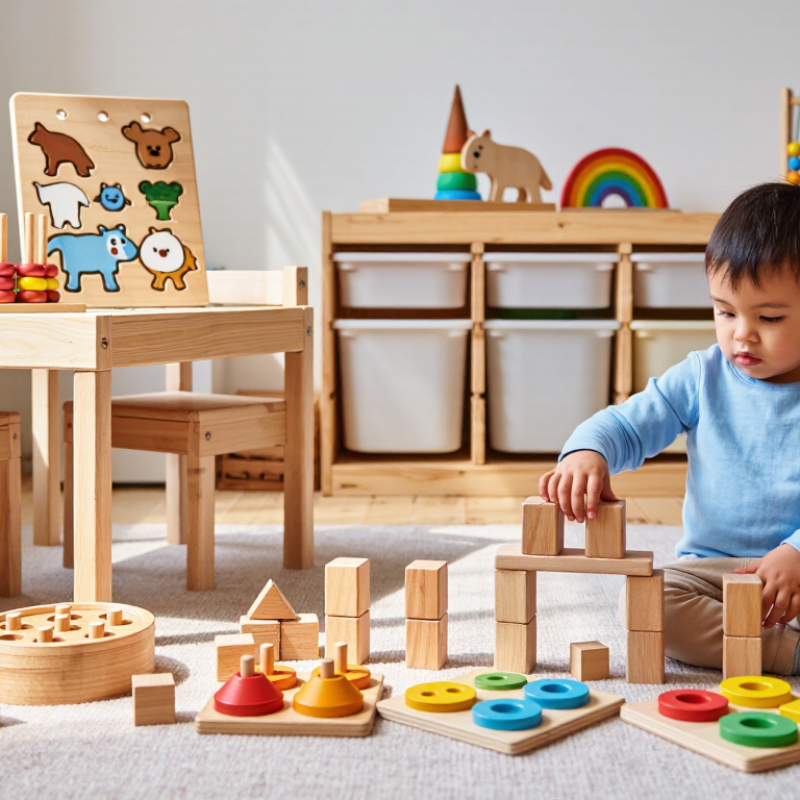
Define 2026 Wooden Educational Toys by Learning Goal and Age Range
2026 Top Wooden Educational Toys for Better Learning?
Define 2026 Wooden Educational Toys by Learning Goal and Age Range
Choose a wooden educational toy by the skill it invites, not by appearance alone. For early sorting and counting, try chunky shape pieces, nesting cups, or a simple counting board. Look for pieces a child can grip and move independently. Small wins matter. For ages one to three, sturdy objects support naming, matching, and hand-eye practice. Toddlers may focus for only a few minutes, so brief play is normal.
For ages three to five, puzzles with a few large pieces can encourage spatial reasoning and patient trial and error. Count aloud as pieces turn. Older preschoolers may enjoy lacing boards, pattern blocks, or pretend-play sets that prompt sequencing and storytelling. Ask what they notice instead of supplying every answer. That can feel slower. Yet the child does more thinking. For ages five and up, construction planks or rule-based games can support planning, measurement, and flexible problem-solving. Choose challenge, not frustration.
Age ranges are rough guides, not promises; children develop at different speeds. Check that pieces are smooth and securely joined, and follow age and care guidance. A toy can teach more when adults leave room for experimentation. A child might stack blocks into a crooked bridge, then test one more piece. That wobble is useful. One imperfect reality: a thoughtfully chosen toy may sit untouched for a week. Notice what draws the child back, and adjust the challenge rather than forcing a lesson.
Match Toy Skills to CDC Milestones: Skills 75% of Children Can Do
CDC milestone checklists describe skills that at least 75% of children can do by a given age. They are useful observation guides, not deadlines or diagnostic tests. A child may be developing typically while taking longer with one skill. If you have concerns, discuss them with a qualified health professional.
Choose wooden toys for the skill your child is practicing, not just their age label. Stacking blocks invite grasping, releasing, and experimenting with balance. A simple shape puzzle encourages turning pieces and noticing how they fit. Large beads and a sturdy lacing cord can support hand-eye coordination, with close supervision and age-appropriate parts. Keep it playful. Sit nearby and watch what your child tries before offering help.
The best measure is not how quickly a toy is mastered. Notice small actions: a careful reach, a new attempt, or asking you to join. Some toys will be ignored; that happens. CDC milestones can help you choose a reasonable next challenge, but they do not say which toy a child needs. Rotate a few safe options, follow your child’s interest, and check progress over time rather than turning play into a test.
Top Wooden Educational Toy Skills to Match CDC Milestones
How to read this chart: CDC milestone ages mark skills that most children (at least 75%) can do by that age. The wooden-toy play ideas are illustrative ways to practise related skills, not CDC recommendations or a guarantee of development.
Source: CDC Developmental Milestones.
Compare Blocks, Puzzles, and Pretend Play Using AAP Guidance
Wooden toys do not teach by themselves. Learning comes from what a child can try, repeat, and share. The American Academy of Pediatrics (AAP) describes play as important for healthy development and encourages playful interaction between children and caregivers. A sturdy set of blocks invites stacking, sorting, and balancing. One tower will fall. That is useful feedback, not failure.
Puzzles offer a different kind of practice. A child turns a chunky piece, checks its shape, then tries again. Simple puzzles can support problem-solving and fine-motor practice, but difficulty matters: too many small pieces may turn curiosity into frustration. Stay nearby. Offer a hint, not the answer. AAP guidance supports responsive, age-appropriate play; watch the child’s cues and adjust.
Pretend play adds language and social thinking. A wooden animal or small kitchen set can become a clinic, bus, or noisy café. Ask, “What happens next?” Then let the child lead. For toddlers, name objects and copy simple actions; older children may invent rules and roles. No toy guarantees better learning. Some days, the blocks become a drum. That counts as play, too.
Check Under-3 Safety Against CPSC Small-Parts Rules and ASTM F963
Wooden educational toys encourage sorting, stacking, and patient problem-solving. Yet smooth wood can hide a safety failure. For children under 36 months, check small parts carefully. Under CPSC rule 16 CFR Part 1501, a part that fits entirely inside the small-parts test cylinder is prohibited in toys intended for this age group. The cylinder is about 1.25 inches wide and 2.25 inches deep. No guesswork. Check more than the toy as sold: a peg, wheel, or bead could detach after foreseeable use and abuse.
ASTM F963-23 is incorporated into the CPSC’s mandatory toy standard and sets applicable mechanical and physical testing requirements. Ask whether age grading and small-parts testing cover the complete toy, including attached pieces. The CPSC’s 2023 Toy-Related Deaths and Injuries report estimated 231,700 toy-related emergency-department injuries among children 14 and younger. That figure covers many toy types, not wooden toys alone or choking incidents alone. At home, inspect joints, painted edges, and loose pieces; a quick glance can miss a cracked peg. I would not treat “wooden” as a safety rating.
Assess Wood Finishes Under EN 71-3’s 19-Element Migration Standard
2026 Top Wooden Educational Toys for Better Learning?
Assess Wood Finishes Under EN 71-3’s 19-Element Migration Standard
A smooth finish can make a wooden puzzle pleasant to handle, but appearance alone cannot show what may migrate from its surface. EN 71-3 assesses the migration of 19 elements from toy materials under specified test conditions. It measures migration, not simply the total amount of an element in the material.
That distinction matters. A painted stacking ring, a stained alphabet block, and unfinished wood may fall into different material categories. The applicable limits depend on the category. Testing should reflect the finished toy, including coatings a child could touch or mouth during normal play. Ask for test documentation that identifies the tested material and finish. A report for raw wood may not represent a later-applied coating.
Look closely, too. Check for peeling paint, rough edges, and finish worn thin around corners. These signs do not prove a migration failure, but they can point to poor durability. Small details count. A glossy surface is not automatically safer, and a natural-looking stain is not automatically harmless. Even careful checks have limits: a parent cannot verify chemical migration by sight or smell. Independent laboratory testing gives more useful evidence, though the sample and production batch still matter.
2026 Top Wooden Educational Toys for Better Learning? — Assess Wood Finishes Under EN 71-3’s 19-Element Migration Standard
Reference limits for Category III scraped-off toy materials. Values are migration limits in mg/kg of toy material, not measured results for any particular wooden toy or finish.
| Element |
Category III migration limit (mg/kg) |
Wood-finish assessment note |
| Aluminium (Al) | 28,130 | Check pigments and mineral-based additives where used. |
| Antimony (Sb) | 560 | Review colorants and other formulation ingredients. |
| Arsenic (As) | 47 | Check relevant pigments, preservatives, and raw-material specifications. |
| Barium (Ba) | 18,750 | Review pigments and mineral fillers where present. |
| Boron (B) | 15,000 | Check boron-containing ingredients if included in the finish. |
| Cadmium (Cd) | 17 | Pay particular attention to colored pigments and coatings. |
| Chromium (III) (Cr III) | 460 | Assess separately from chromium (VI); speciation matters. |
| Chromium (VI) (Cr VI) | 0.053 | Very low limit; use an appropriate laboratory method for the required determination. |
| Cobalt (Co) | 130 | Review pigments and metal-containing additives where used. |
| Copper (Cu) | 7,700 | Check colorants and other copper-containing ingredients. |
| Lead (Pb) | 23 | Review pigments, coatings, and supplier declarations. |
| Manganese (Mn) | 15,000 | Check relevant pigments and mineral ingredients. |
| Mercury (Hg) | 94 | Include in the required migration panel; do not infer compliance from appearance. |
| Nickel (Ni) | 930 | Check pigments and any metal-containing formulation ingredients. |
| Selenium (Se) | 460 | Review relevant colorants and raw materials. |
| Strontium (Sr) | 56,000 | Check mineral pigments and fillers where present. |
| Tin (Sn) | 180,000 | This limit is for tin; organic tin compounds have a separate limit. |
| Organic tin compounds | 12 | Review relevant additives and coatings; this is distinct from total tin. |
| Zinc (Zn) | 46,000 | Check pigments and mineral-based ingredients where used. |
How to use this table: These are reference migration limits, not pass/fail results for a product. The applicable material category depends on the toy material and test assessment; a laboratory should confirm the category, test method, and current applicable EN 71-3 edition. Migration testing assesses substances released under specified test conditions and is not the same as measuring total element content.
Conclusion
Choosing the top wooden educational toys for 2026 starts with matching a child’s age and learning goals. Blocks can encourage spatial reasoning and early problem-solving, puzzles support visual recognition and persistence, and pretend-play sets invite language, imagination, and social skills. Rather than assuming one toy suits every child, compare these play experiences with age-appropriate developmental guidance, including CDC milestones—skills that at least 75% of children can do by a given age—and use them as a guide, not a measure of an individual child’s potential. This helps explain why are wooden educational toys better for learning: well-chosen toys invite hands-on exploration, repetition, and open-ended play.
Safety and construction matter alongside educational value. For children under three, check age labels and ensure toys do not contain parts that pose a choking risk, following applicable CPSC small-parts guidance and ASTM F963 requirements. Inspect sturdy construction, smooth edges, and securely attached pieces. For painted or coated wood, look for clear information about finish testing and EN 71-3’s migration limits for 19 elements. A thoughtful choice balances developmental fit, engaging play, and verified safety.

 Chicharo Toys
