What Are Wooden Educational Toys?

Time:2026-11-04 Author:Mason
0%

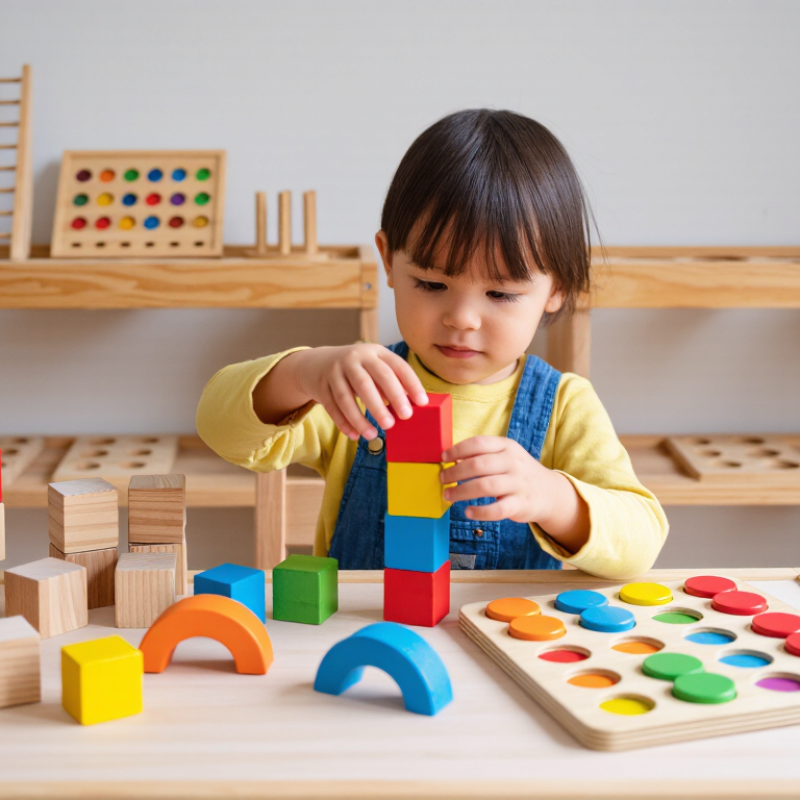
What are wooden educational toys? They are play materials made mainly from wood and designed to support learning through hands-on exploration. A child may stack beechwood blocks, turn a chunky puzzle piece, or sort smooth shapes by color. These simple actions can build early skills in problem-solving, coordination, language, and spatial awareness. The toy does not need lights or a screen to invite curiosity.

Education pioneer Maria Montessori wrote, “The hands are the instruments of man’s intelligence.” Her observation helps explain why thoughtful wooden toys can encourage active learning: children handle, test, and rearrange objects rather than only watch them. Still, material alone does not make a toy educational. Its design, safety, age suitability, and the way adults engage with a child all matter. A plain wooden shape may prompt rich questions; a poorly chosen toy may simply sit on a shelf.

This guide explores what wooden educational toys are, how they support development, and what to consider when choosing them. You’ll find examples ranging from stacking blocks to counting boards, along with practical notes on durability and play value. Wooden toys can be sturdy and tactile, but they are not automatically better for every child or every family. That distinction matters.
What Are Wooden Educational Toys?

Definition and Core Features of Wooden Educational Toys

Wooden educational toys are play materials made mainly from wood and intended to support learning through hands-on exploration. Examples include stacking blocks, shape sorters, counting pieces, simple puzzles, and pretend-play objects. The material alone does not make a toy educational. Its value depends on the actions and thinking it invites.

Core features often include clear, repeatable tasks and room for experimentation. A child may balance a block, compare its width, then adjust the tower after it tips. That small sequence can exercise spatial reasoning, problem-solving, and hand control. Pieces with varied shapes or textures also give children words to describe what they notice. Some toys encourage turn-taking or storytelling with an adult or another child. Learning is not automatic. A puzzle that is too difficult may frustrate; one with only one obvious move may quickly lose its appeal.

Good design uses pieces sized and shaped for the intended age, with smooth surfaces and sturdy construction. Caregivers can check for splinters, cracks, or loose components as toys wear. Wood can feel warm and satisfyingly solid, but it may be heavier than plastic and should be stored dry. It is easy to overstate the benefits: a wooden toy cannot replace responsive conversation, shared play, or time to explore. A thoughtful choice fits the child’s current abilities while leaving some room to grow.

Materials and Craftsmanship Used in Their Production

Wooden educational toys begin with species selection, not decoration. Beech and maple are dense, close-grained choices for small pieces; softer woods are lighter but may dent more easily. Grain direction matters. Cutting across it can leave weak edges, while careful sanding creates smooth surfaces for little hands. Makers typically dry timber before shaping it, then inspect joints, corners, and moving parts. A snug fit should still allow a puzzle piece to lift without force.

Moisture control is a practical craft issue. The USDA Forest Products Laboratory’s 2021 Wood Handbook places wood’s fiber saturation point at about 30% moisture content for many species. Below that point, changing moisture can cause wood to shrink or swell. That is why production teams check timber condition and allow finished pieces to acclimate. Small gaps can appear later. Not every workshop handles this perfectly. Finishing also requires care: coatings should be fully cured, evenly applied, and assessed for durability and suitability for children’s products. Professional testing can assess relevant safety requirements, but a smooth finish alone proves little. The grain, joinery, drying, and final inspection all matter.

How Wooden Toys Support Learning and Development

What Are Wooden Educational Toys?

How Wooden Toys Support Learning and Development

Wooden educational toys are play materials made mainly from wood, designed to invite exploration and practice. A set of blocks, for example, can become a bridge, a tower, or a pretend shop. The learning comes from what children do with them, not from wood alone. Simple shapes often leave room for children to invent their own rules.

Stacking, sorting, and fitting pieces together can help children practise hand control and notice size, balance, and patterns. A child may test a wide block at the base, watch a tower wobble, then try again. Small discoveries matter. With another person nearby, play can also prompt useful language: “This one is longer,” or “What happens if we turn it?” These moments can support early reasoning without turning play into a lesson.

Some toys offer more challenge than others, and a puzzle that feels manageable one day may frustrate a child the next. That is worth noticing. Adults can offer a hint, then leave space for the child to experiment. Check that pieces suit the child’s age, have smooth surfaces, and are large enough for younger children to handle safely. Wooden toys are not automatically better for every learner; preferences, abilities, and interests differ. A child who ignores the blocks may be learning more from drawing, movement, or pretend play.

Common Types by Age Group and Learning Goal

For babies and young toddlers, wooden grasping rings, simple rattles, and chunky stacking pieces invite reaching and hand-eye practice. Choose pieces too large to swallow, with smooth surfaces and securely fitted parts.

Around ages two to three, nesting cups, shape sorters, and large-piece puzzles support matching, spatial reasoning, and early problem-solving. A child may try the same shape several times before turning it correctly.

That pause is part of the learning.

Preschoolers often benefit from wooden blocks, lacing boards, counting beads, and pretend-play sets. Blocks encourage balance and planning; counting pieces make quantities easier to see and touch.

By early school age, pattern tiles, construction sets, and more complex puzzles can challenge sequencing, fine-motor control, and persistence. Small hands learn.

Age labels are useful, but they can make development seem tidier than it is. Interest, dexterity, and patience vary widely, so adults can adjust difficulty by offering fewer pieces or a simple prompt.

Check toys regularly for splinters, loose components, or damage, and supervise children who still mouth objects.

Safety Standards, Care, and Selection Considerations

What Are Wooden Educational Toys?
Safety Standards, Care, and Selection Considerations

Wooden educational toys include puzzles, stacking blocks, shape sorters, and other play objects designed to invite hands-on learning. Their simple forms can encourage sorting, building, and problem-solving, but wood alone does not guarantee safety. Check the age guidance and inspect the toy for sharp edges, cracks, splinters, or parts that could loosen. Small parts matter. For young children, consider choking risks and follow the product’s age recommendations. Look for clear information about materials, coatings, and applicable safety testing in your region. If those details are missing, ask the seller or choose a better-documented option.

Selection should fit the child’s abilities and the way the toy will be used. Smooth, sturdy pieces with a comfortable size are easier for small hands to manage. Avoid assuming that a heavier toy is always more durable; weight can make it awkward or unsafe if dropped. Care is simple, but not careless: wipe surfaces with a lightly damp cloth, then dry them promptly. Keep wooden toys away from prolonged soaking and heat, which may damage the finish or cause warping. Inspect them regularly, especially after rough play. A tiny crack may seem harmless at first. Replace or set aside a damaged toy until its safety can be assessed. Natural grain and color variation are common, though they should not distract from sound construction and clear safety information.

What Are Wooden Educational Toys? Safety Standards, Care, and Selection Considerations

Selected EN 71-3 migration limits for Category III toy materials—materials that can be scraped off—shown in milligrams per kilogram. The logarithmic scale makes the wide range of limits easier to compare. These are standard limits, not test results for any particular wooden toy.

For wooden toys, check the manufacturer’s age guidance and safety information, inspect for splinters or loose parts, and clean according to the care instructions. A chart like this does not replace checking that a toy complies with applicable safety requirements.

FAQS

What are wooden educational toys?

They are wooden play materials that invite hands-on learning. Examples include blocks, shape sorters, counting pieces, and simple puzzles.

How can these toys support learning?

A child can stack blocks, watch a tower tip, and try again. This can practice spatial thinking, problem-solving, and hand control.

Does wood alone make a toy educational?

No. The learning value comes from what a child can do and explore with it. Not automatically.

How can caregivers choose a suitable toy?

Look for pieces that fit the child’s abilities, with a little room to grow. A puzzle that feels impossible may cause frustration.

Which woods are often used for small pieces?

Beech and maple are dense, close-grained choices. Softer woods weigh less but may dent more easily.

Why does moisture matter in wooden toys?

Wood can shrink or swell as its moisture changes. Small gaps happen. Store toys dry, and remember that gaps may appear over time.

What should caregivers check as toys wear?

Look for splinters, cracks, loose parts, and rough edges. A smooth finish alone does not prove that every detail is sound.

Can wooden toys replace shared play?

No. They cannot replace conversation, adult attention, or time to explore. We may overestimate what a toy can do on its own.

Conclusion

What are wooden educational toys? They are playthings made primarily from wood and designed to encourage children to explore, think, and learn through hands-on play. Their simple, sturdy forms can support activities such as sorting, stacking, building, matching, and imaginative storytelling. Depending on the toy and the child’s age, these activities may help develop fine motor skills, problem-solving, coordination, creativity, and early concepts such as shapes, numbers, and patterns.

These toys can be made from different types of wood and finished with child-appropriate coatings, with careful shaping and assembly helping create smooth, durable pieces. Common examples include blocks, puzzles, stacking toys, and pretend-play items, each suited to different ages and learning goals. When choosing one, consider the child’s developmental stage, the toy’s size and construction, and any relevant safety information. Regularly inspect wooden toys for damage, clean them according to care guidance, and store them in a dry place to help keep them in good condition.

Mason

Mason

Mason is a seasoned marketing professional with a deep expertise in the company's offerings and a passion for driving brand awareness. With a strong background in digital marketing strategies, he has an innate ability to connect with diverse audiences and effectively communicate product benefits.......